
Over the years, research has pointed to a simple dietary habit linked to a meaningfully lower risk of cardiovascular disease — including heart attacks and strokes: eating soy foods regularly.
The core finding
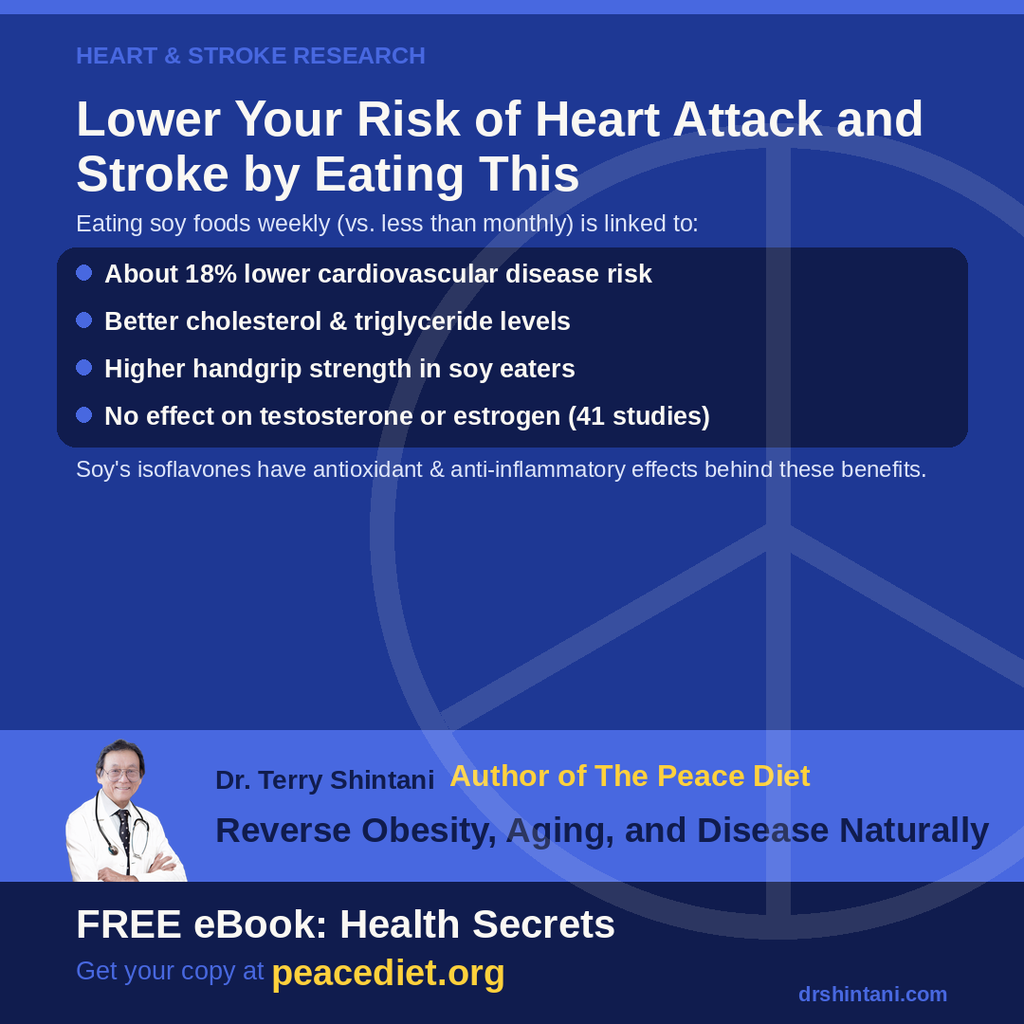
Research has found that people who consumed soy foods at least once a week had a notably lower risk of cardiovascular disease — on the order of 18% lower — compared to those who ate soy less than once a month. Researchers believe this benefit is largely attributable to soy’s isoflavone content, plant compounds with antioxidant and anti-inflammatory properties that may also help improve cholesterol and triglyceride levels.
Beyond heart health: strength and hormones
Two other findings about soy are worth knowing, especially since they run counter to some common assumptions:
- Grip strength: A large cohort study of nearly 30,000 adults found that higher soy food consumption was associated with higher handgrip strength — a marker often used as a general indicator of overall muscular health. This was an observational study, so it shows an association rather than proof that soy directly causes stronger grip.
- Hormones: Despite a persistent myth that soy lowers testosterone or raises estrogen in men, a comprehensive meta-analysis covering 41 clinical studies found that neither soy protein nor soy isoflavones had any significant effect on total testosterone, free testosterone, estradiol, or estrone levels in men — regardless of dose or study duration.
The bottom line
Soy foods — tofu, edamame, tempeh, soy milk, and others — offer a well-supported way to support cardiovascular health, without the hormonal downsides some people worry about.
For more natural health tips, get my free eBook, Health Secrets, at PeaceDiet.org.
I’m Dr. Shintani, for your health.
Sources & further reading:


