
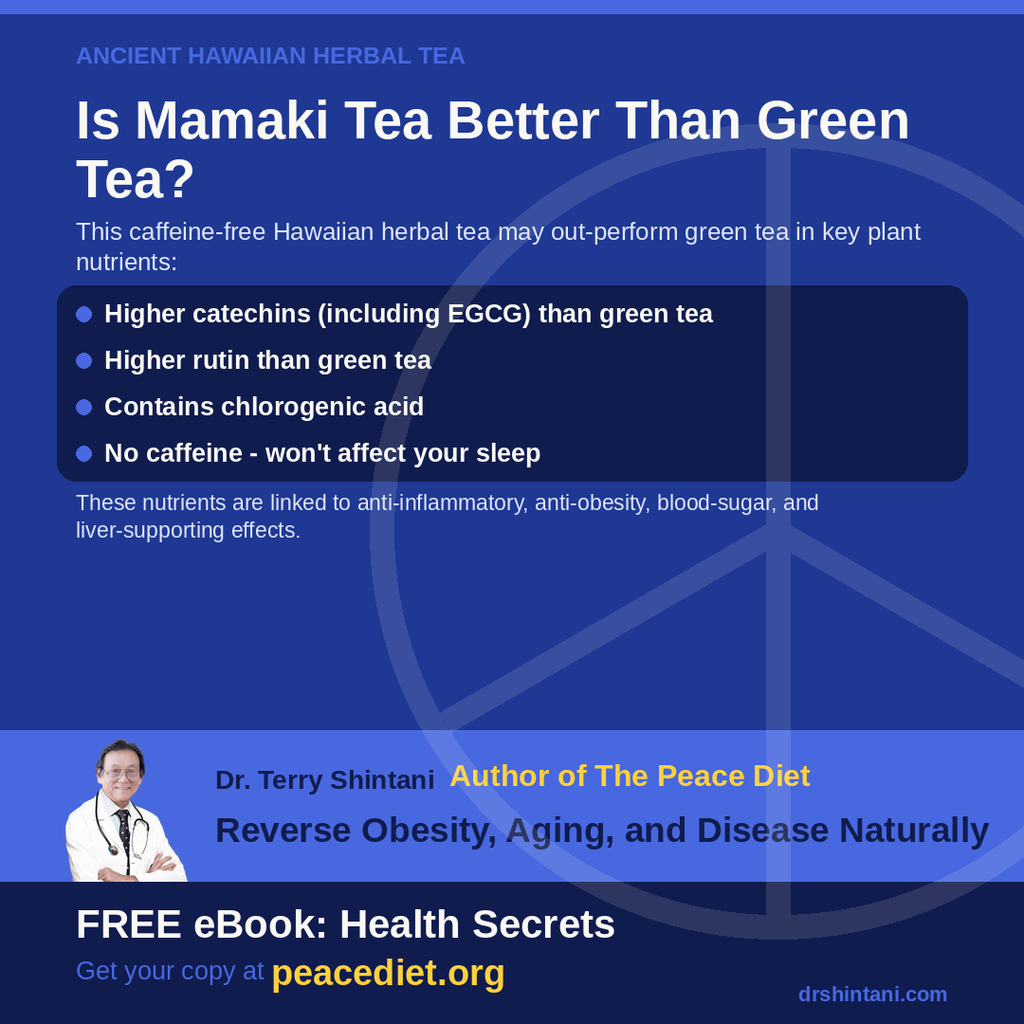
Mamaki (Pipturus albidus) is a Hawaiian herbal tea with a long history of traditional use — and it’s now drawing serious attention from natural health researchers for good reason.
University of Hawaiʻi research has found that mamaki leaves contain higher catechin levels than Gyokuro green tea, as well as oolong and black tea, along with higher rutin than green tea. Chlorogenic acid is also documented as one of mamaki’s three major polyphenols.
These three types of phytonutrients — catechins (such as EGCG), rutin, and chlorogenic acid — have each been studied individually in other research for potential anti-inflammatory, anti-obesity, anti-diabetic, anti-hypertensive, anti-cancer, and liver-protective effects. It’s worth noting these effects are documented for the individual compounds in broader research, rather than being proven specifically for mamaki tea itself — but mamaki’s naturally high levels of these same compounds make it a promising candidate for similar benefits.
One more advantage: unlike green tea (Camellia sinensis), mamaki comes from an entirely different plant and contains no caffeine — so it won’t interfere with sleep.
Research into mamaki is ongoing. A recent USDA-funded study (University of Hawaiʻi, UNC Greensboro, and Wake Forest School of Medicine) is currently investigating mamaki’s bioactive compounds and their effects on vascular inflammation.
For more on natural health, get Dr. Shintani’s free eBook, Health Secrets, at peacediet.org, and his full book The Peace Diet on Amazon.
Sources: University of Hawaiʻi — Nutrients, Polyphenols, and Total Antioxidant Activities in Mamaki | NLM Native Voices | UNC Greensboro — USDA Grant to Study Hawaiian Tea Leaves


