
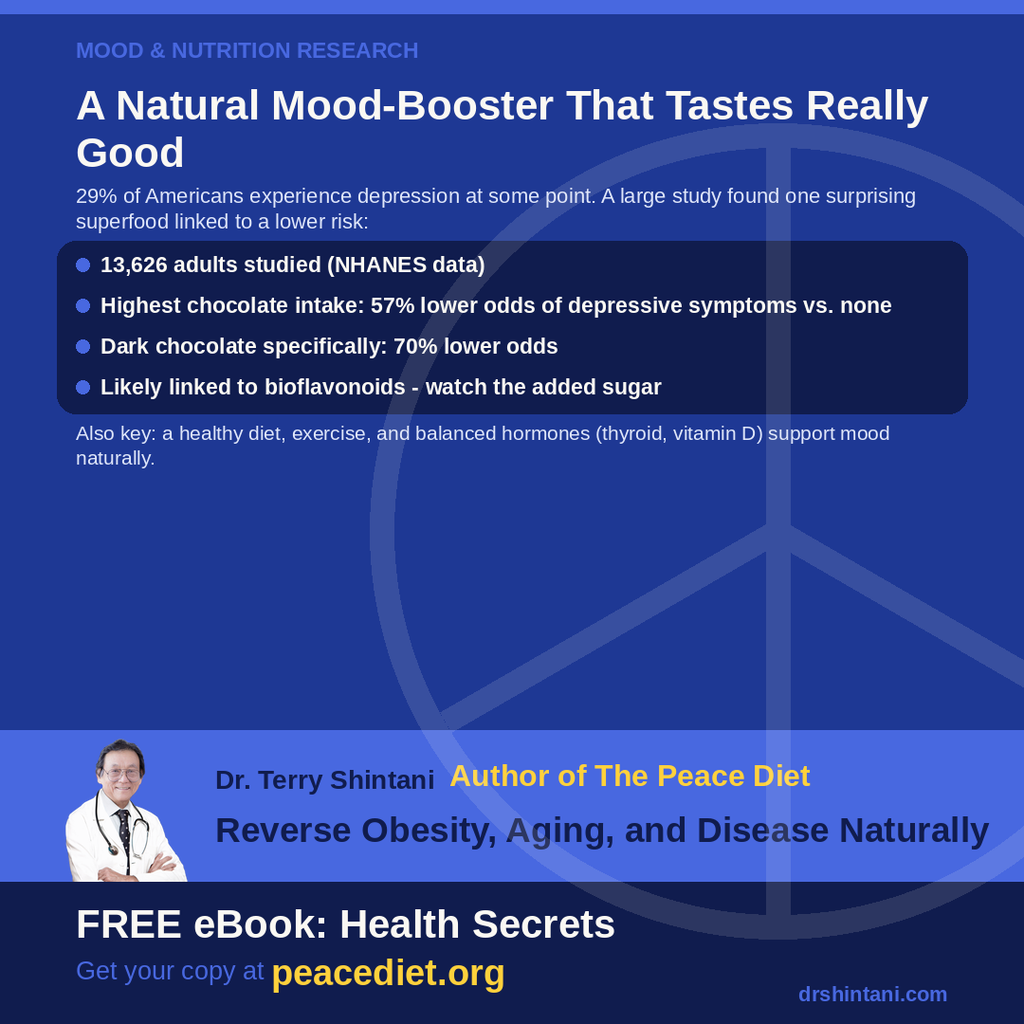
If you’ve struggled with depression, you’re far from alone — an estimated 29% of Americans experience depression at some point in their lives. Many people would prefer to avoid the side effects that come with antidepressant medications, which makes natural, food-based approaches worth a closer look.
A study analyzing data from 13,626 US adults (part of the National Health and Nutrition Examination Survey) found a striking association: people with the highest chocolate intake had 57% lower odds of clinically relevant depressive symptoms compared to those who ate none. When the researchers looked specifically at dark chocolate, the association was even stronger — 70% lower odds.
It’s important to note this was an observational, cross-sectional study, meaning it shows an association, not proof that chocolate causes improved mood. The researchers themselves noted the relationship could run in either direction — people who are less depressed may simply be more inclined to enjoy chocolate, or other shared factors could be at play.
That said, other research has pointed to a plausible mechanism: the bioflavonoids found in dark chocolate have shown anti-inflammatory and antioxidant properties that researchers believe may have antidepressant potential.
A few caveats and complements:
- Watch the added sugar — many chocolate products pair cocoa with high sugar content, which can offset other health benefits.
- A diet rich in fiber, prebiotics, and other bioflavonoids supports a healthy gut microbiome, which plays a role in producing neurotransmitters that regulate mood.
- Regular exercise and optimizing hormones — including thyroid function, sex hormones, and vitamin D — can meaningfully support mood as well.
None of this replaces professional care for depression, but it’s a reminder that everyday food choices can be part of a broader approach to mental wellbeing.
For more tips on natural health, get Dr. Shintani’s free eBook, Health Secrets, at peacediet.org.
Sources: PubMed — Chocolate Consumption and Depressive Symptoms, NHANES | NIH/PubMed — Flavonoids and Mental Health | CDC — Depression


