
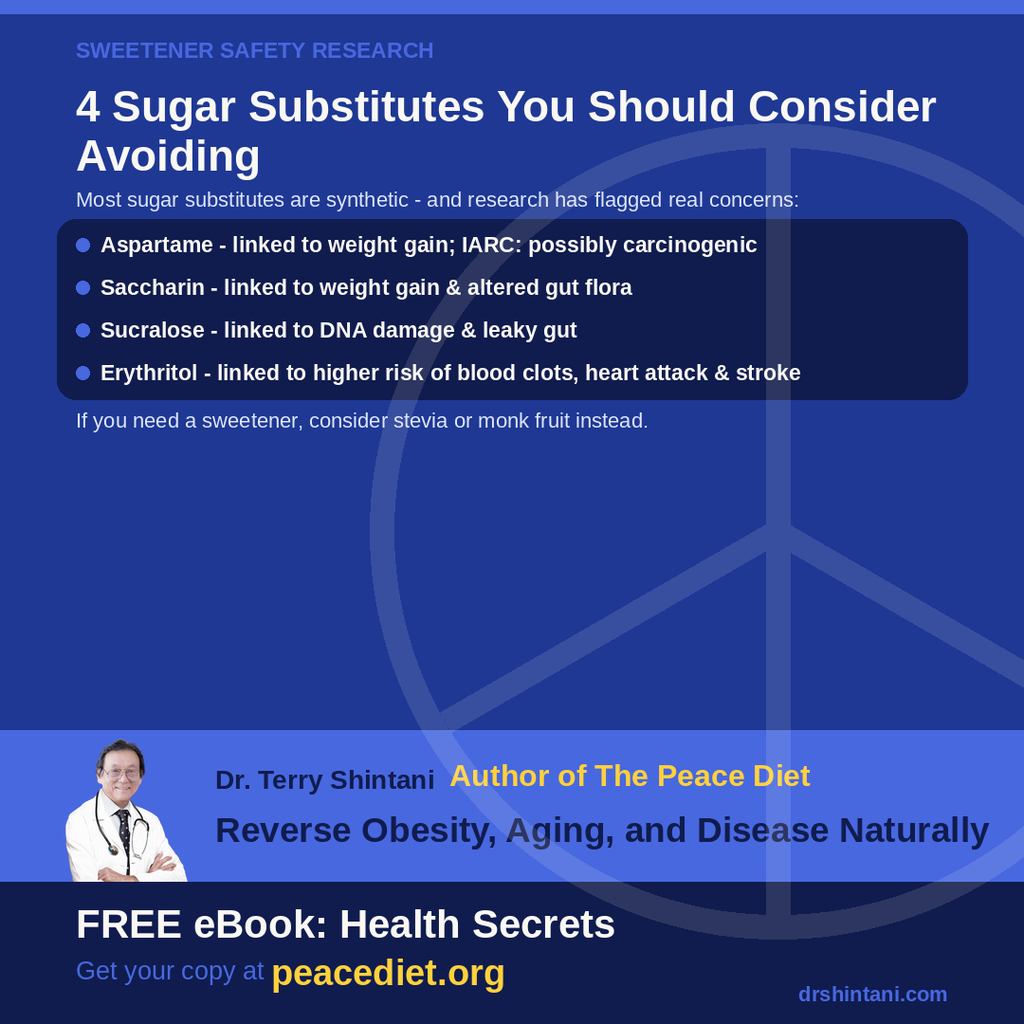
Sugar has been villainized as an ingredient to avoid, which has made sugar substitutes increasingly popular. But most of these substitutes are synthetic — and the research on several of them raises real concerns. Here are four worth reconsidering.
1. Aspartame
Research has found aspartame associated with weight gain rather than weight loss, undermining its main selling point. In 2023, the International Agency for Research on Cancer (IARC), part of the World Health Organization, classified aspartame as “possibly carcinogenic to humans” (Group 2B). The WHO/FAO’s accompanying review also concluded there was no clear benefit to weight control from using it.
2. Saccharin
One of the oldest artificial sweeteners, saccharin has research — notably the influential Suez et al. study published in Nature — linking it to altered gut microbiota and glucose intolerance in both animal models and some human subjects, alongside associations with weight gain over time.
3. Sucralose
While earlier research on sucralose and weight gain was mixed, a 2023 study from NC State University found that a breakdown compound formed when sucralose is metabolized, sucralose-6-acetate, caused DNA damage in lab testing and was linked to leaky gut syndrome.
4. Erythritol
This natural sugar alcohol has recently come under scrutiny: a 2023 study from the Cleveland Clinic, published in Nature Medicine, found erythritol associated with a higher risk of blood clots, heart attack, and stroke.
What to use instead: if you need a sweetener, stevia and monk fruit are generally considered better options — both are plant-derived, don’t carry the same research red flags, and don’t spike blood sugar.
For more tips on natural health, get Dr. Shintani’s free eBook, Health Secrets, at peacediet.org.
Sources: WHO/IARC — Aspartame Hazard Assessment | Nature — Artificial Sweeteners and Glucose Intolerance (Suez et al.) | NC State — Sucralose and DNA Damage | Cleveland Clinic/Nature Medicine — Erythritol and Cardiovascular Risk | NLM Native Voices


