
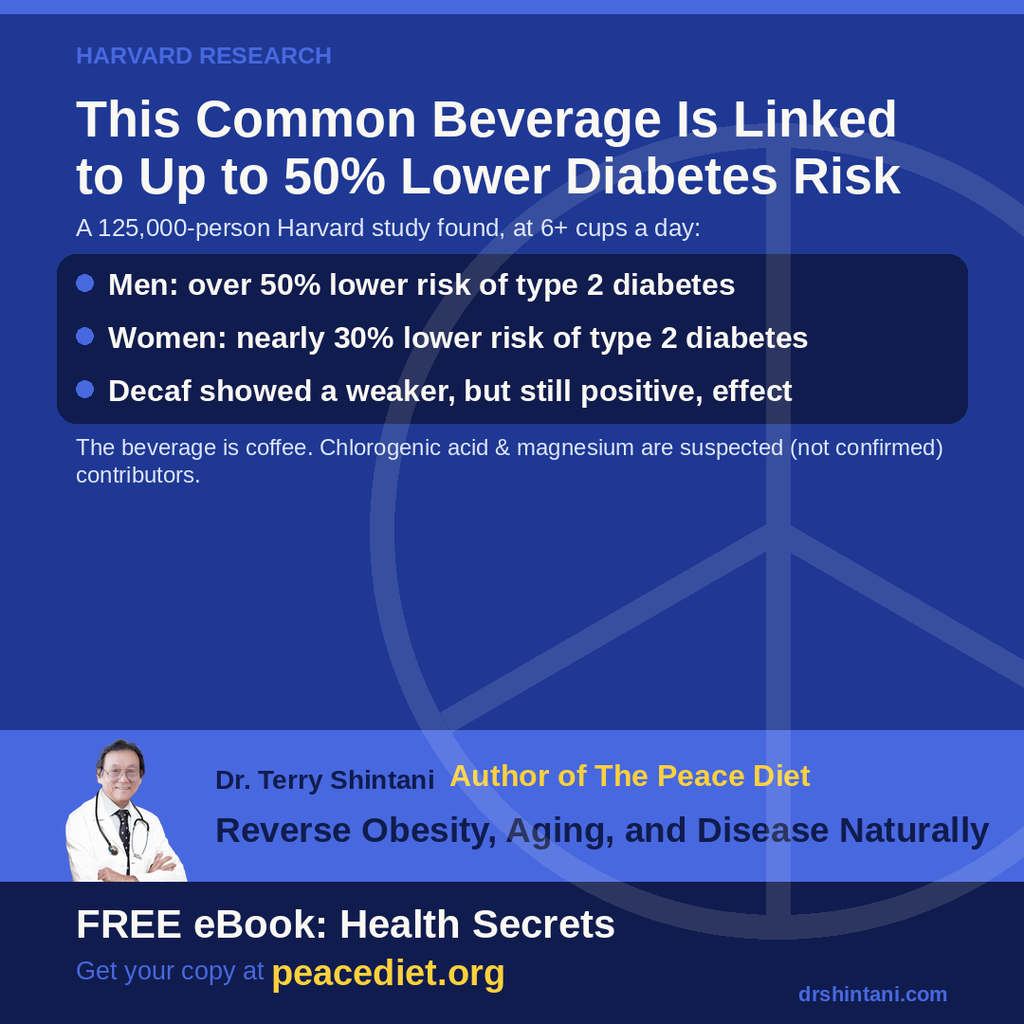
What if one of the most widely consumed beverages in the world also happened to lower your risk of type 2 diabetes? Research suggests that may be the case for coffee.
A landmark observational study from the Harvard School of Public Health and Brigham and Women’s Hospital followed more than 125,000 people — 41,934 men over 12 years and 84,276 women over 18 years — who were free of diabetes, cancer, and cardiovascular disease at the start of the study.
The findings: people who drank 6 or more cups of coffee a day had a significantly lower risk of developing type 2 diabetes compared to those who didn’t drink coffee at all.
- Women: nearly 30% lower risk
- Men: over 50% lower risk
Why might coffee help?
Researchers point to compounds like chlorogenic acid and magnesium as possible contributors — these have antioxidant and anti-inflammatory properties, and may help slow sugar and fat absorption, improve insulin sensitivity, and support healthy insulin release. That said, the study’s lead author was candid that “we still don’t know exactly why coffee is beneficial for diabetes” — so these mechanisms are promising theories, not settled science.
Interestingly, decaffeinated coffee was also associated with a lower diabetes risk, though the effect was weaker than with regular coffee — suggesting caffeine itself may play some role, alongside coffee’s other natural compounds.
A word of caution:
This doesn’t mean more coffee is automatically better. Excessive caffeine intake can contribute to its own health issues, including insomnia, anxiety, and in some people, irregular heartbeat. If you’re considering increasing your coffee intake for health reasons, talk to your doctor first — especially if you have any underlying health conditions.
For more tips on natural health, get my free eBook, Health Secrets, at PeaceDiet.org.
I’m Dr. Shintani, for your health.
Sources & further reading:


