
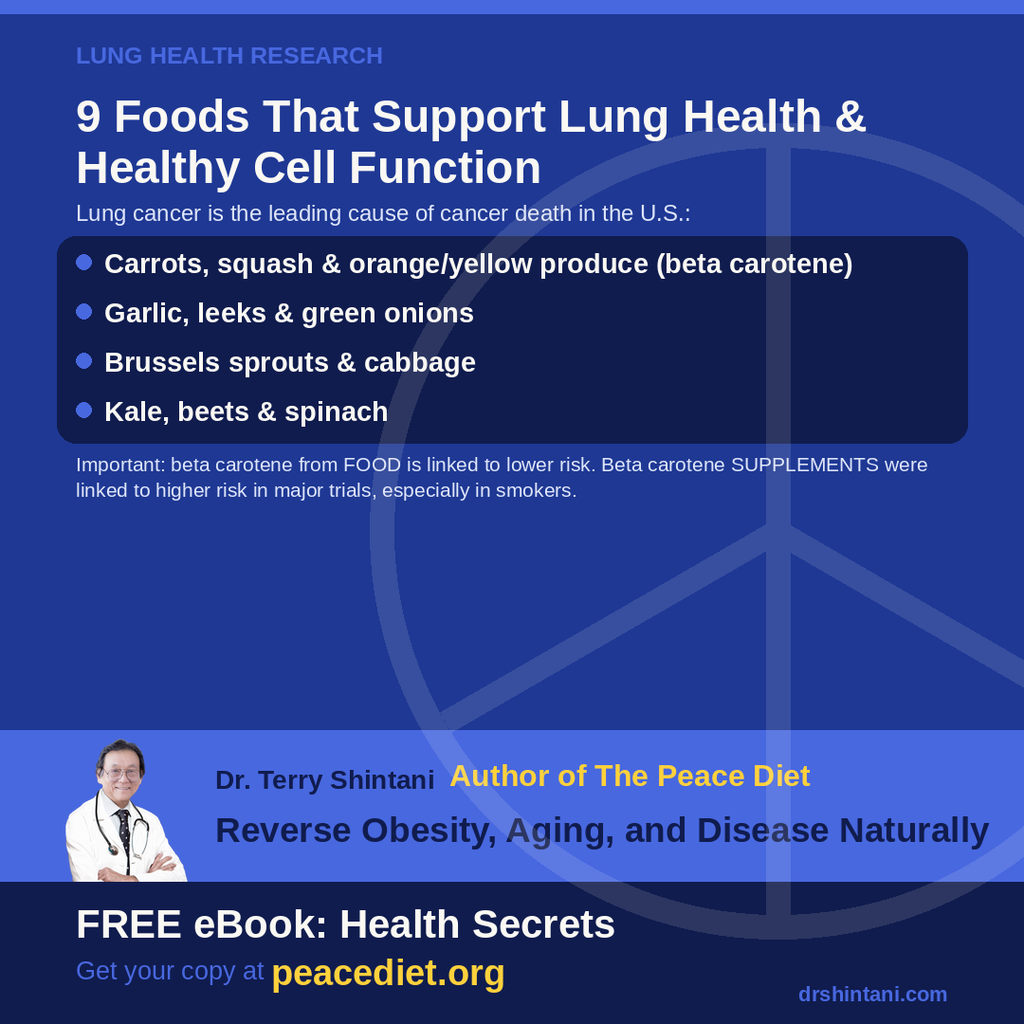
Lung cancer remains the most common cause of cancer death in the U.S., and it’s increasingly affecting younger people — including non-smokers. While there’s no substitute for not smoking as the single biggest risk-reduction step, research has identified several whole foods worth knowing about when it comes to supporting lung health.
Beta carotene — from food, not supplements
Population studies have found that people who ate more foods containing beta carotene had a lower incidence of lung cancer. This led researchers to look specifically at whole foods rich in beta carotene — carrots, squash, and orange and yellow fruits and vegetables.
Here’s the critical nuance: this protective association has only held up for beta carotene from food. Two major clinical trials — the ATBC trial and CARET — found that high-dose beta carotene supplements were associated with a higher risk of lung cancer, particularly in smokers (CARET was stopped early after showing a 28% increase in lung cancer incidence in the supplement group) (NCI findings). Researchers believe the protective effect of beta carotene-rich foods likely comes from a combination of nutrients working together — not beta carotene in isolation — which is why food sources, not supplements, are the recommended way to get it.
Lab research on vegetable extracts and cancer cells
Separately, laboratory research has tested the effects of extracts from various vegetables on cultured cancer cells. Garlic extract, for example, has been shown in multiple published studies to suppress the growth of human lung cancer cells (A549) in vitro, likely due to its allyl sulfide compounds.
Other research has tested extracts from cruciferous vegetables — including cabbage, kale, broccoli, and related vegetables — against various cultured human cancer cell lines, finding substantial growth-inhibiting effects (in some published studies, in the 70–95% range) for several of these vegetables. Most of this specific cell-culture research has focused on cancers other than lung cancer, so while it supports the general principle that compounds in garlic, alliums, and cruciferous vegetables can slow cancer cell growth in the lab, the exact numbers for lung cancer cells specifically should be treated as a promising area of ongoing research rather than a settled statistic.
The takeaway
Building a diet rich in carrots, squash, garlic, leeks, green onions, Brussels sprouts, kale, spinach, and beets is a reasonable, well-supported way to support lung and overall health — just skip the high-dose supplement shortcuts.
Watch my introductory lecture on cancer prevention at PeaceDiet.org.
I’m Dr. Shintani, for your health.
Sources & further reading:


