
One of the body’s most important natural defenses against cancer is a process called apoptosis — programmed cell death, in which a cell that recognizes itself as abnormal self-destructs before it can replicate and spread. Cancer progression is linked, in part, to a breakdown in this process: cancer cells can evade apoptosis and continue dividing unchecked.
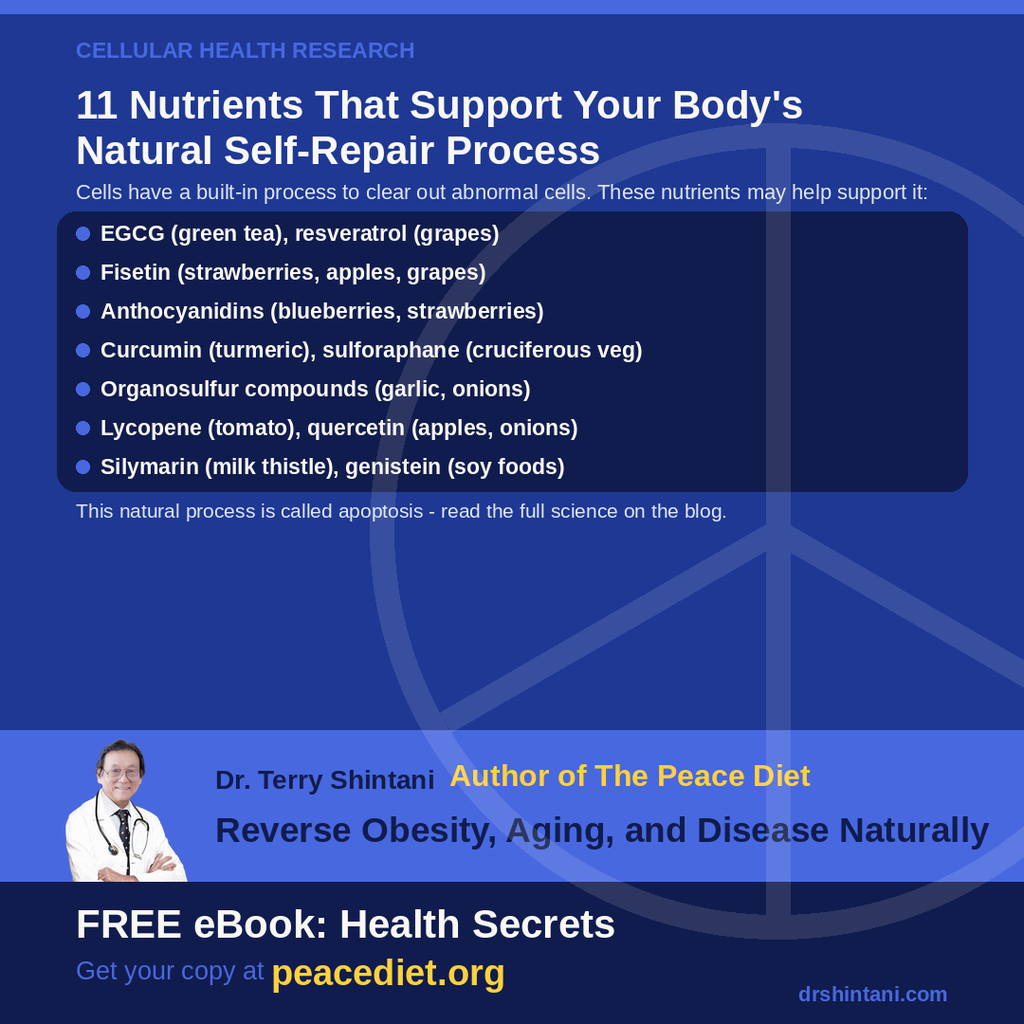
Researchers have identified a number of naturally occurring plant compounds that appear to help restore or strengthen apoptosis in cancer cells. Here are 11 of them, and the foods that provide them:
- EGCG (epigallocatechin gallate) — found in green tea
- Resveratrol — found in grapes
- Fisetin — richest in strawberries; also found in apples and grapes
- Anthocyanidins — found in colorful fruits like blueberries and strawberries
- Curcumin — found in turmeric
- Sulforaphane — found in cruciferous vegetables (broccoli, kale, cabbage, Brussels sprouts)
- Organosulfur compounds — found in garlic and onions
- Lycopene — found in tomatoes
- Quercetin — found in apples and onions
- Silymarin — found in milk thistle
- Genistein — found in soy foods
A substantial body of published research supports the role of these compounds in cancer-cell biology, including reviews on curcumin, resveratrol, genistein, and quercetin’s chemopreventive and apoptosis-inducing activity in laboratory studies. Research in this area is ongoing, and food-based intake is studied differently than isolated supplements or extracts — so these foods are best understood as part of an overall health-supporting diet rather than a treatment.
Note: one correction from the original video — fisetin’s best-documented dietary source is strawberries, not mango.
For more on diet and cancer prevention, see Dr. Shintani’s introductory lecture on cancer and his free eBook, Health Secrets, at peacediet.org.
Sources: National Library of Medicine — Native Voices | NIH/PubMed — Chemopreventive Activities of Curcumin, Resveratrol, Genistein, Quercetin | CDC — Nutrition and Cancer Prevention


