



Heart disease remains the leading cause of death in the United States — and globally. Despite decades of medical advances, cardiovascular events including heart attacks and strokes continue to claim more lives than any other condition. The search for effective, accessible preventive strategies remains one of the most important frontiers in medicine.
Against that backdrop, a finding from nutritional research stands out for its simplicity and its significance: consuming soy foods at least once a week is associated with an 18% lower risk of developing cardiovascular disease.
Not a pharmaceutical intervention. Not a complex protocol. A simple, widely available, affordable food — consumed regularly — associated with nearly a fifth reduction in the risk of the world’s most common killer.
What the Research Shows
A study examining the relationship between soy food consumption and cardiovascular outcomes found that participants who ate soy foods — including tofu, edamame, miso, and tempeh — at least once a week had an 18% lower risk of developing cardiovascular disease, including heart attacks and strokes, compared to those who rarely or never consumed these foods.
This finding is consistent with a broader body of research spanning decades and multiple populations — particularly in Asian countries where soy foods have been dietary staples for centuries, and where rates of cardiovascular disease have historically been significantly lower than in Western populations eating animal-protein-centered diets.
The consistency of this association across different study designs, populations, and time periods gives it meaningful credibility — and points toward a real biological mechanism rather than a statistical coincidence.
Why Soy Foods Protect the Heart — The Isoflavone Connection
Researchers believe the cardiovascular protective effects of soy are primarily due to their isoflavone content. Isoflavones are a class of plant compounds — sometimes called phytoestrogens because of their structural similarity to the hormone estrogen — found almost exclusively in soy and a small number of other legumes.
Isoflavones have been shown in clinical research to exert several complementary effects that directly support cardiovascular health:
Antioxidant effects. Isoflavones neutralize free radicals — unstable molecules that damage the cells lining blood vessel walls, triggering the inflammatory cascade that leads to arterial plaque formation and ultimately to heart attacks and strokes. By reducing oxidative stress in arterial tissue, isoflavones help preserve the integrity of the vascular system.
Anti-inflammatory effects. Chronic low-grade inflammation is now recognized as a central driver of atherosclerosis — the progressive narrowing and hardening of arteries that underlies most cardiovascular events. Isoflavones inhibit several of the inflammatory signaling pathways involved in this process, helping to keep arterial walls healthy and responsive.
Cholesterol improvement. Multiple clinical trials have shown that regular soy consumption meaningfully reduces LDL cholesterol — the “bad” cholesterol that accumulates in arterial walls — and increases HDL cholesterol, which helps clear excess cholesterol from the bloodstream. The FDA has formally recognized the cholesterol-lowering effects of soy protein, approving a health claim for soy foods and reduced heart disease risk.
Triglyceride reduction. Elevated triglycerides — a type of fat in the bloodstream — are an independent risk factor for cardiovascular disease. Soy isoflavones have been shown to reduce triglyceride levels, complementing their effects on cholesterol and contributing to an overall improvement in the cardiovascular risk profile.
Soy Foods in the Peace Diet
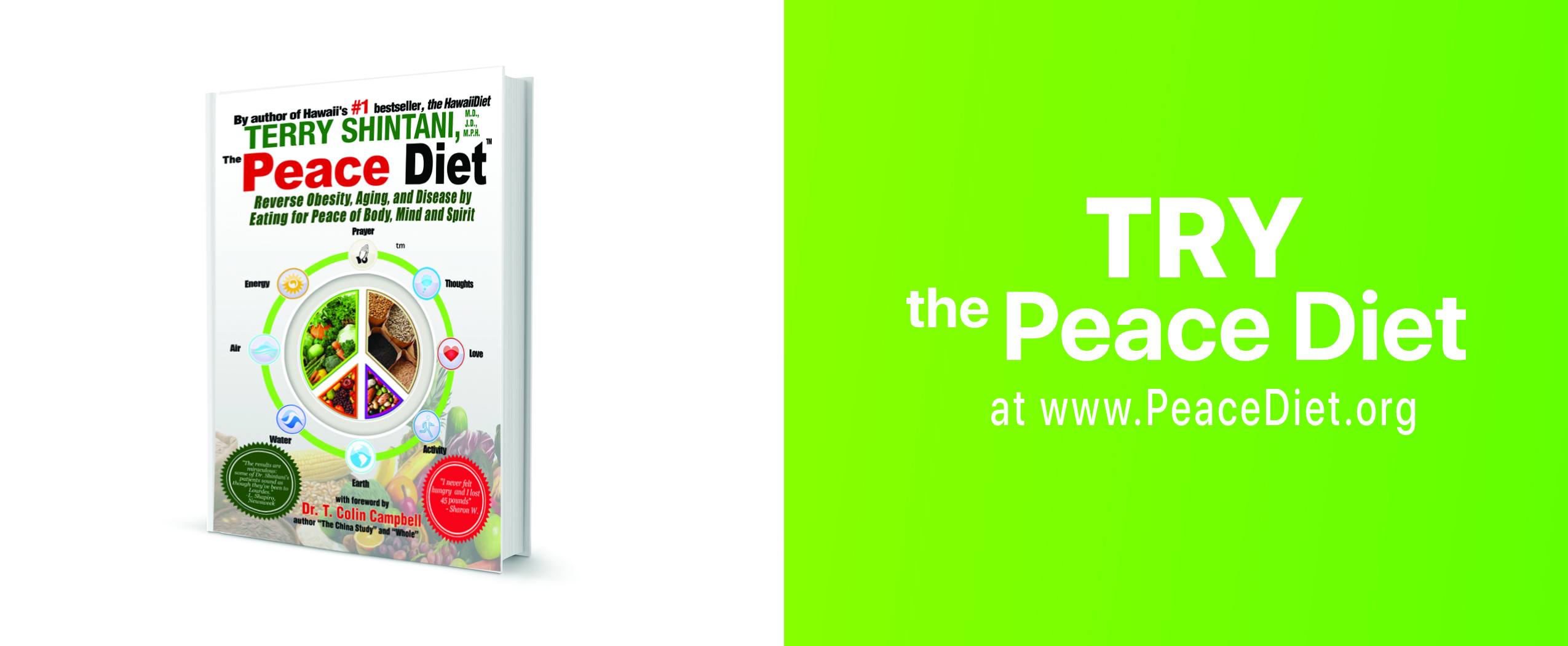
The cardiovascular benefits of soy align perfectly with the Peace Diet philosophy that Dr. Shintani has championed for over three decades. The Peace Diet emphasizes whole, plant-centered foods that address the root causes of chronic disease — and soy foods, with their unique combination of complete protein, isoflavones, fiber, and healthy fats, represent one of the most nutritionally complete plant protein sources available.
In traditional Hawaiian, Japanese, Chinese, and Korean cuisines — all of which Dr. Shintani draws on in developing the Peace Diet — soy-based foods have been central to the diet for centuries. Miso soup at breakfast, tofu in stir-fries and soups, edamame as a snack, tempeh as a meat substitute — these are not exotic health foods. They are everyday staples with centuries of cultural validation and now decades of clinical research behind them.
How to Add More Soy to Your Diet
The research suggests that consuming soy foods at least once a week is associated with meaningful cardiovascular benefit — a threshold that is easily achievable with very little dietary disruption:
Tofu — perhaps the most versatile soy food, tofu can be scrambled, grilled, baked, added to soups, stir-fried, or blended into smoothies. Firm tofu works well in savory dishes; silken tofu works in smoothies and desserts. It absorbs the flavor of whatever it is cooked with, making it extraordinarily adaptable to any cuisine.
Edamame — young soybeans, typically served steamed in their pods with a pinch of salt. One of the simplest and most satisfying plant-based snacks available, edamame provides complete protein, fiber, and a significant dose of isoflavones in a form that requires almost no preparation.
Miso — fermented soybean paste, the base of Japan’s iconic miso soup. Beyond soup, miso can be used as a marinade, a salad dressing base, or a flavor enhancer in sauces and gravies. As a fermented food, it also provides probiotic benefits that support gut health alongside its cardiovascular benefits.
Tempeh — fermented whole soybeans pressed into a firm cake. Higher in protein than tofu and with a heartier, nuttier flavor, tempeh can be sliced and pan-fried, crumbled into sauces, or used as a meat substitute in virtually any recipe. The fermentation process also makes its nutrients more bioavailable.
Soy milk — a simple swap for dairy milk in coffee, oatmeal, or baking, unsweetened soy milk provides isoflavones and complete protein without the saturated fat and cholesterol of dairy.
A Note on Soy Safety
Concerns about soy — particularly around its phytoestrogen content and potential hormonal effects — have been widely circulated but are not supported by the preponderance of clinical evidence. The isoflavones in soy do not behave like synthetic estrogen in the body, and decades of research in populations consuming soy as a dietary staple have not shown adverse hormonal effects in men or women at typical food intake levels.
As with all foods, moderation and variety matter. Whole soy foods — tofu, edamame, miso, tempeh — are preferable to highly processed soy protein isolates found in some protein bars and supplements. The cardiovascular benefits documented in research are associated with whole soy foods, not with processed soy derivatives.
The Bottom Line
An 18% reduction in cardiovascular disease risk from eating tofu once a week is a finding worth paying attention to. It is not a cure, and it does not replace the broader dietary and lifestyle changes that form the foundation of cardiovascular health. But it is a meaningful, accessible, evidence-based step that virtually anyone can take — regardless of cooking skill, budget, or culinary background.
Add tofu to your stir-fry. Snack on edamame. Start your morning with miso soup. These small, sustainable habits — multiplied across years and decades — may add up to exactly the kind of protection that research is now confirming.
Your heart will thank you.
Dr. Terry Shintani is a Harvard-trained physician (MD, JD, MPH), a Living Treasure of Hawai’i, and the creator of the Waianae Diet and the Peace Diet. He continues to see patients at his Honolulu practice and shares daily health insights on YouTube.
🌿 Learn more at PeaceDiet.org | Watch the video: https://www.instagram.com/reel/DbH4pjtT8le/