Skip to content
  • About
  • Blog
  • Testimonials
  • Join Us
  • Freebies
  • Contact
  • Social Media
  • PeaceDiet
  • Books
  • Age Calculator
Dr.Shintani

Dr.Shintani

Terry

Blog

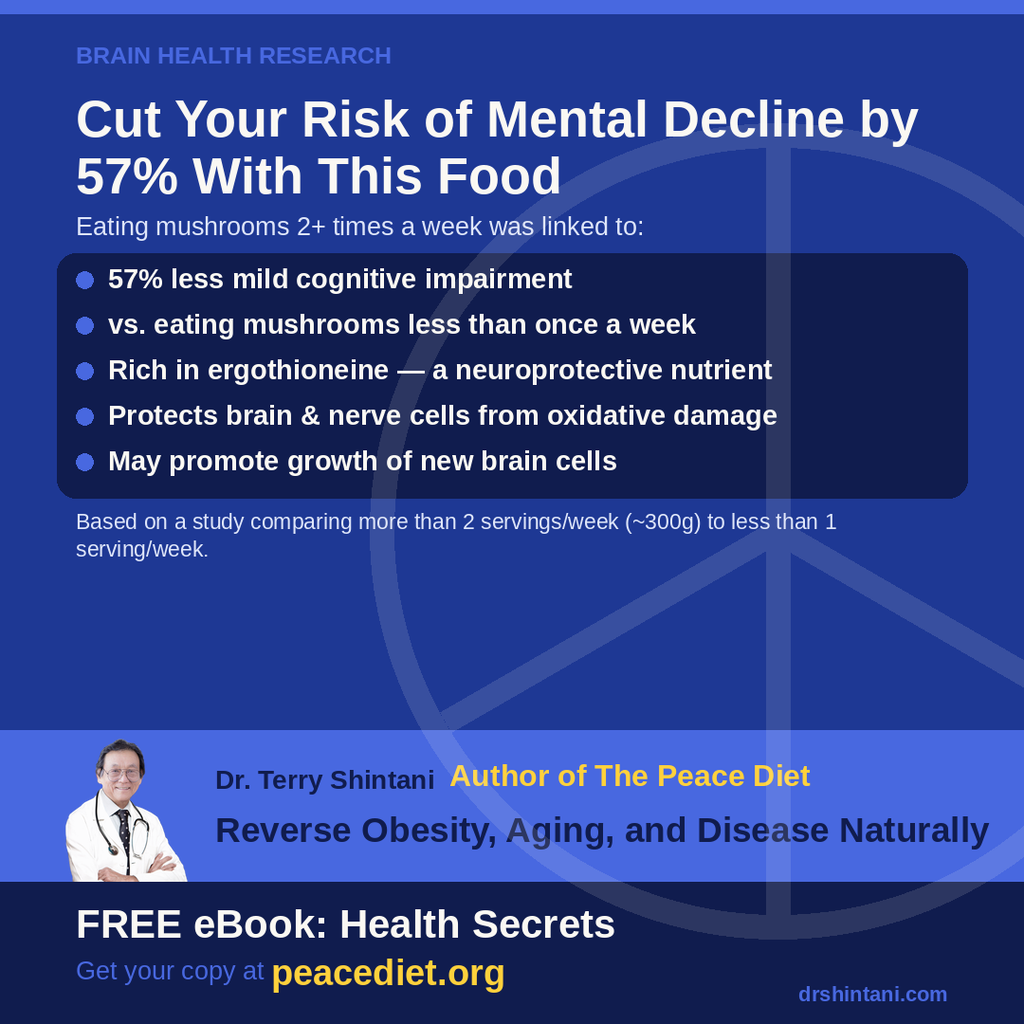
Reduce Your Risk of Mental Decline by 57% by Eating This Twice a Week

Posted on October 18, 2026 By drshintani No Comments on Reduce Your Risk of Mental Decline by 57% by Eating This Twice a Week

Most people fear dementia more than they fear death — so prevention of brain decline matters at any age, according to Dr. Terry Shintani, MD, a Harvard-trained physician and nutritionist.

The research

Researchers studying factors that prevent cognitive decline found a surprising result: people who ate mushrooms two or more times a week had 57% less mild cognitive impairment compared to those who ate mushrooms less than once a week.

Why mushrooms may protect the brain

Researchers believe this effect may be due to ergothioneine, a neuroprotective nutrient found in high amounts in mushrooms. Ergothioneine appears to help protect brain and nerve cells against oxidative damage, and may also help promote the growth of new brain cells.

The takeaway

To help cut cognitive impairment and stay sharp, consider eating more mushrooms. For a list of 15 supplements for brain health, get Dr. Shintani’s free eBook, Health Secrets, at peacediet.org.

Sources: Mushroom consumption and cognitive impairment — National University of Singapore study, 2019; Ergothioneine: antioxidative, neuroprotective compound from mushrooms; NLM Native Voices
Uncategorized

This Nutrient Helps Control Blood Sugar and Blood Pressure — and May Have Anti-Cancer Effects

Posted on October 17, 2026 By drshintani No Comments on This Nutrient Helps Control Blood Sugar and Blood Pressure — and May Have Anti-Cancer Effects

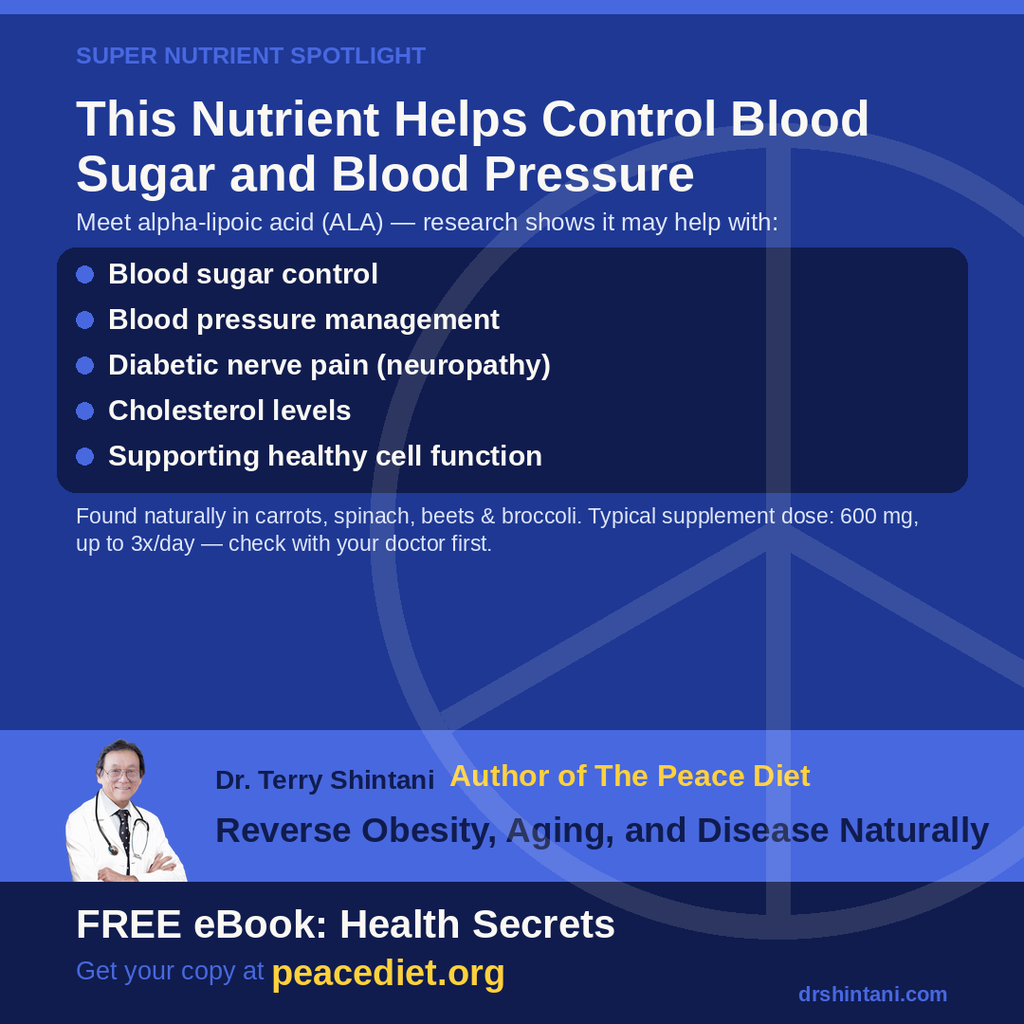
Alpha-lipoic acid (ALA) is a powerful antioxidant that’s earned a place among Dr. Terry Shintani’s favorite “super nutrients” — and the research behind it backs that up.

Blood sugar and blood pressure

ALA is well known for helping control blood sugar, and clinical research also supports a blood-pressure-lowering effect: a 2023 systematic review and dose-response meta-analysis of randomized controlled trials found that ALA supplementation significantly reduced blood pressure in adults.

Diabetic neuropathy

ALA has one of the strongest evidence bases of any natural compound for diabetic neuropathy. Multiple clinical trials and meta-analyses have found it helps prevent and treat nerve damage in people with diabetes, largely attributed to its ability to reduce oxidative stress and inflammation affecting the nerves.

Cholesterol

Research has also linked ALA supplementation to improvements in cholesterol levels.

Early cancer research

More recent laboratory (in vitro) research suggests ALA may slow the growth of several types of cancer cells, including breast, colon, and other cell lines, and some studies suggest it may work synergistically with chemotherapy drugs. It’s important to note this research is still in early, preclinical stages — these are lab and cell-culture studies, not evidence that ALA treats cancer in humans.

Where to find it — and typical dosage

ALA is found naturally in foods like carrots, spinach, beets, and broccoli, and is also available as a supplement. A typical dose used in studies is around 600 mg, up to three times per day — but check with your doctor before starting any new supplement, especially if you’re managing diabetes or take blood sugar or blood pressure medication.

For more tips on controlling blood sugar naturally, get Dr. Shintani’s free eBook, Health Secrets, at peacediet.org.

Sources: Alpha-lipoic acid and blood pressure — systematic review/meta-analysis, Frontiers in Cardiovascular Medicine, 2023; Efficacy of alpha-lipoic acid in diabetic neuropathy — PubMed; Lipoic acid synergizes with antineoplastic drugs in colorectal cancer, MDPI Cells, 2019; NLM Native Voices

Uncategorized

Eat This, Not That, to Help Prevent Alzheimer’s Disease

Posted on October 16, 2026 By drshintani No Comments on Eat This, Not That, to Help Prevent Alzheimer’s Disease

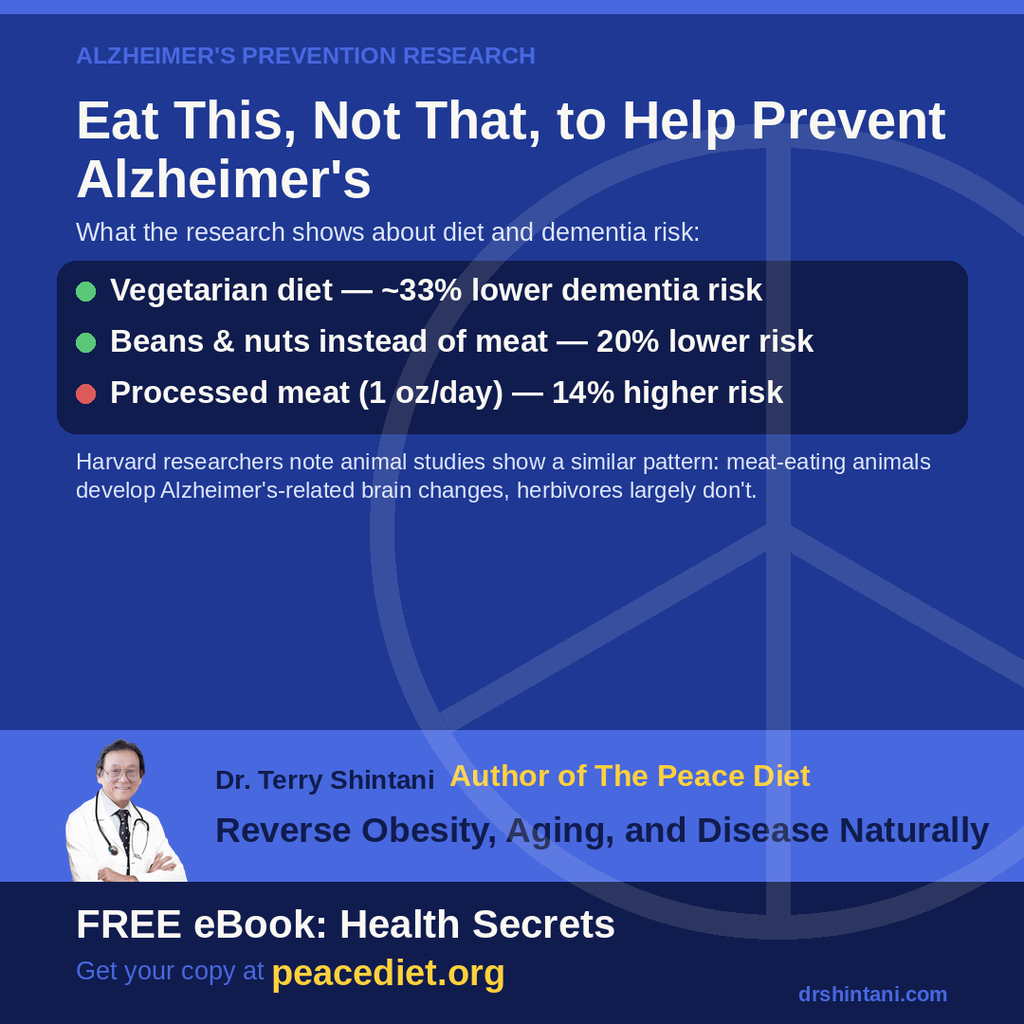
A striking observation from the animal kingdom may offer clues about preventing Alzheimer’s in humans. According to Dr. Terry Shintani, MD, a Harvard-trained physician and nutritionist, Dr. Rudolph Tanzi — chair of the Alzheimer’s research group at Harvard — has pointed out that meat-eating animals tend to develop Alzheimer’s-related brain pathology if they live long enough, while herbivores largely do not. (This specific observation is being confirmed with Dr. Shintani before a precise citation is added.)

While that observation comes from animal studies, recent human research points in the same direction.

Vegetarian diets and dementia risk

A 2022 study published in the journal Nutrients followed a cohort of Taiwanese adults and found that vegetarians had about a 33% lower risk of developing dementia compared to meat eaters.

Processed meat and dementia risk

A 2024 study presented at the Alzheimer’s Association International Conference found that eating about 1 ounce of processed meat per day was associated with a 14% higher risk of dementia, compared to eating very little processed meat. The same study found that replacing that ounce of processed meat with beans or nuts was associated with a 20% lower risk of dementia.

The takeaway

To help preserve brain function, consider eating less meat — particularly processed meat — and more plant-based foods like beans, nuts, and vegetables.

For more tips on brain health and longevity, get Dr. Shintani’s free eBook, Health Secrets, at peacediet.org.

Sources: Tsai et al., “Taiwanese Vegetarians Are Associated with Lower Dementia Risk,” Nutrients, 2022; 2024 Alzheimer’s Association International Conference — processed meat and dementia risk; NLM Native Voices

Uncategorized

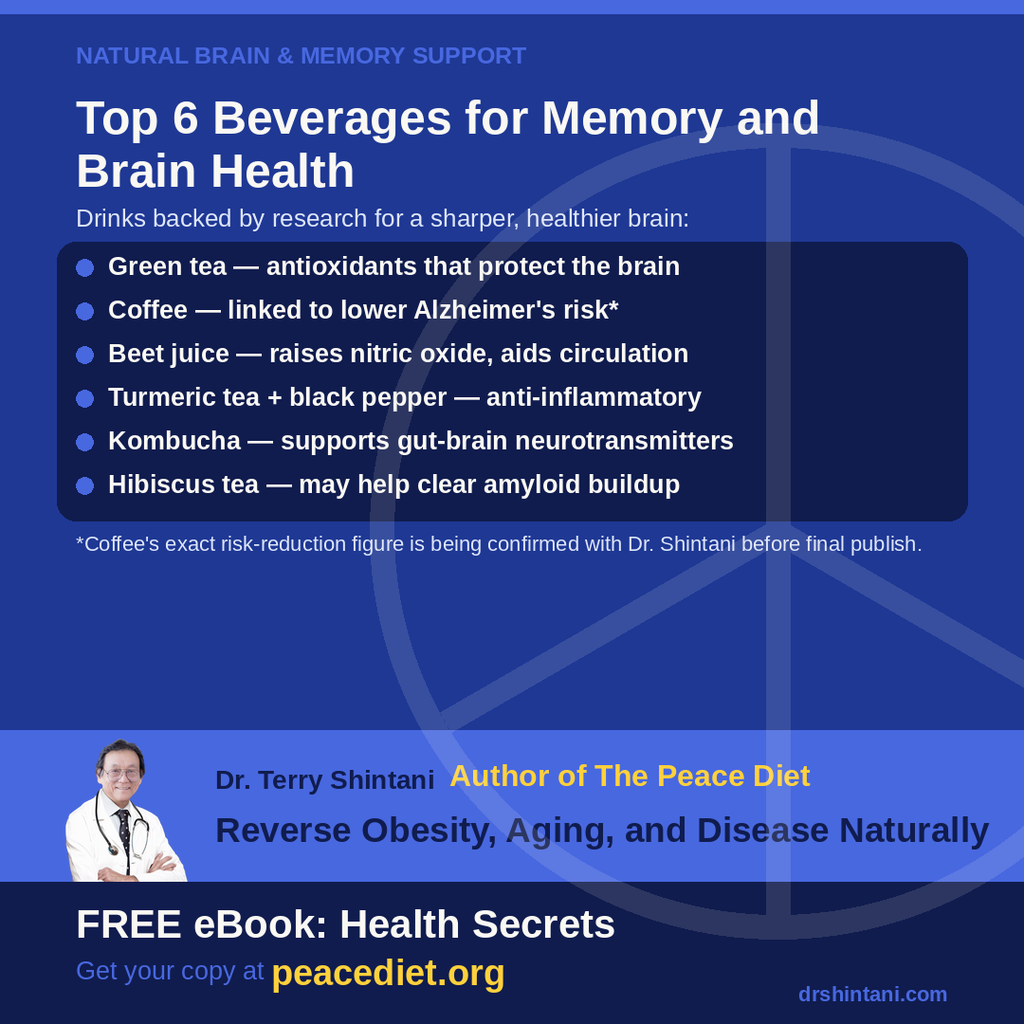
Top 6 Beverages for Memory and Brain Health

Posted on October 15, 2026 By drshintani No Comments on Top 6 Beverages for Memory and Brain Health

What you drink matters for your brain, too. Dr. Terry Shintani, MD, a Harvard-trained physician and nutritionist, shares six beverages worth adding to your routine for memory and cognitive support.

1. Green Tea
Green tea is rich in antioxidants, including catechins and L-theanine, which help protect the brain and support cognitive function.

2. Coffee
Coffee has been linked to a lower risk of Alzheimer’s disease, an effect attributed partly to caffeine and partly to the neuroprotective properties of chlorogenic acid. (Specific risk-reduction figures vary by study — this post will be updated with Dr. Shintani’s preferred source once confirmed.)

3. Beet Juice
Beet juice is known to raise nitric oxide levels in the body, which helps improve blood circulation to the brain.

4. Turmeric Tea with Black Pepper
This combination provides powerful anti-inflammatory protection for the brain — black pepper helps the body absorb turmeric’s active compound, curcumin.

5. Kombucha
As a probiotic beverage, kombucha helps preserve the gut flora responsible for producing neurotransmitters that support brain function.

6. Hibiscus Tea
Recent research has found that hibiscus tea contains gossypetin, a compound shown (in animal studies) to stimulate microglia — the brain’s cleanup cells — to help clear beta-amyloid protein, a hallmark of Alzheimer’s disease. While promising, this research is still in early stages.

The takeaway

From antioxidant-rich teas to circulation-boosting beet juice, these beverages offer simple, daily ways to support brain health. For more tips on health and longevity, get Dr. Shintani’s free eBook, Health Secrets, at peacediet.org.

Sources: Gossypetin and amyloid-beta clearance study; NLM Native Voices; additional coffee/Alzheimer’s citation pending confirmation.

Uncategorized

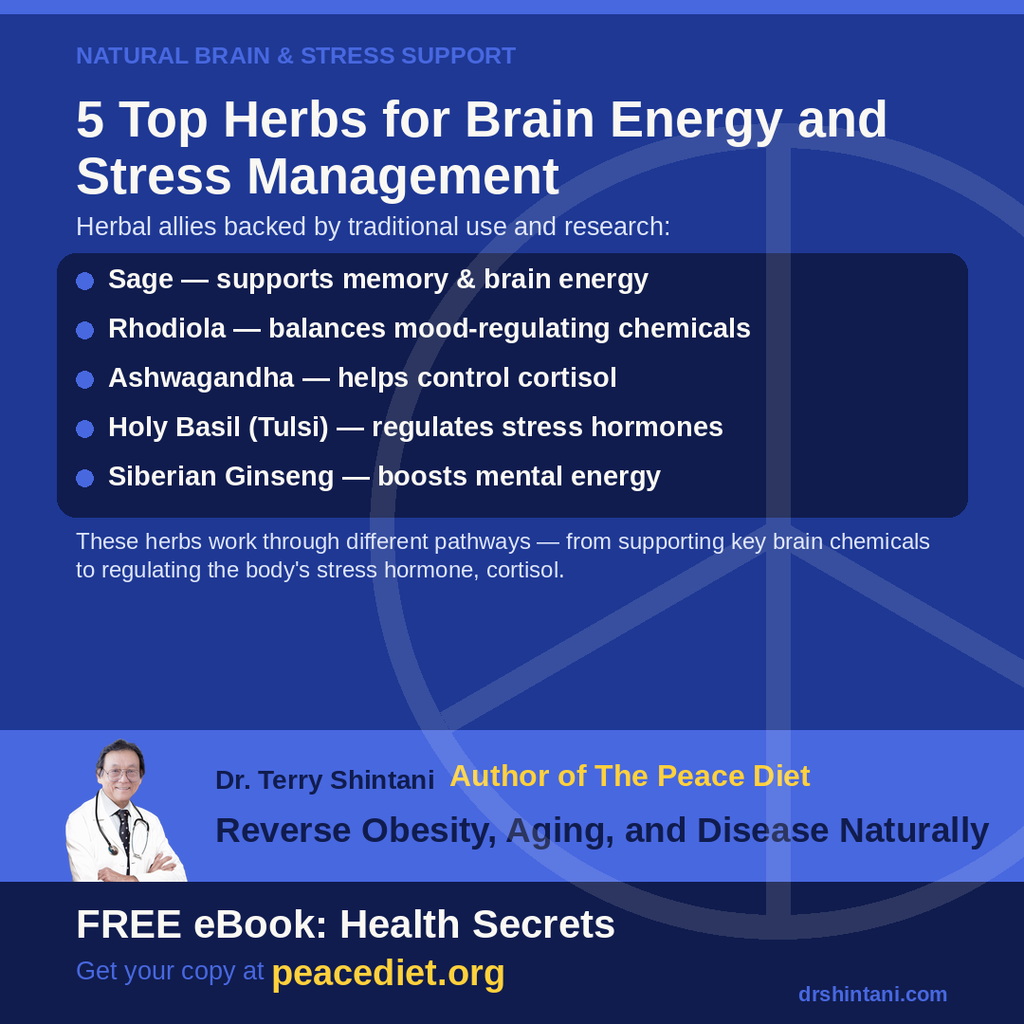
5 Top Herbs for Brain Energy and Stress Management

Posted on October 14, 2026 By drshintani No Comments on 5 Top Herbs for Brain Energy and Stress Management

Looking for natural ways to support mental energy and manage stress? According to Dr. Terry Shintani, MD, a Harvard-trained physician and nutritionist, these five herbs are among the most well-studied for brain and stress support.

1. Sage
As its name suggests, sage has long been used to enhance brain power and memory. Research suggests one of its effects is as an acetylcholinesterase inhibitor — meaning it helps preserve acetylcholine, a neurotransmitter important for brain energy and memory.

2. Rhodiola
Rhodiola is thought to help by managing neurotransmitters such as norepinephrine, serotonin, and dopamine — all involved in mood and mental energy.

3. Ashwagandha
This adaptogenic herb helps control cortisol levels and may modestly increase testosterone, supporting the body’s resilience to stress.

4. Holy Basil (Tulsi)
Holy basil also helps regulate cortisol levels, making it another helpful tool for managing stress.

5. Siberian Ginseng (Eleuthero)
Also known as eleuthero, this herb contains compounds called eleutherosides, which appear to boost mental energy by increasing oxygen utilization in the body.

The takeaway

These five herbs work through different pathways — some by supporting key brain neurotransmitters, others by helping regulate the body’s stress hormone, cortisol. For a fuller list of stress-support herbs and more natural health tips, get Dr. Shintani’s free eBook, Health Secrets, at peacediet.org.

Sources: NLM Native Voices; further NIH/PubMed citations on sage, rhodiola, ashwagandha, holy basil, and eleuthero to be added if Dr. Shintani wants specific study references included.

Uncategorized

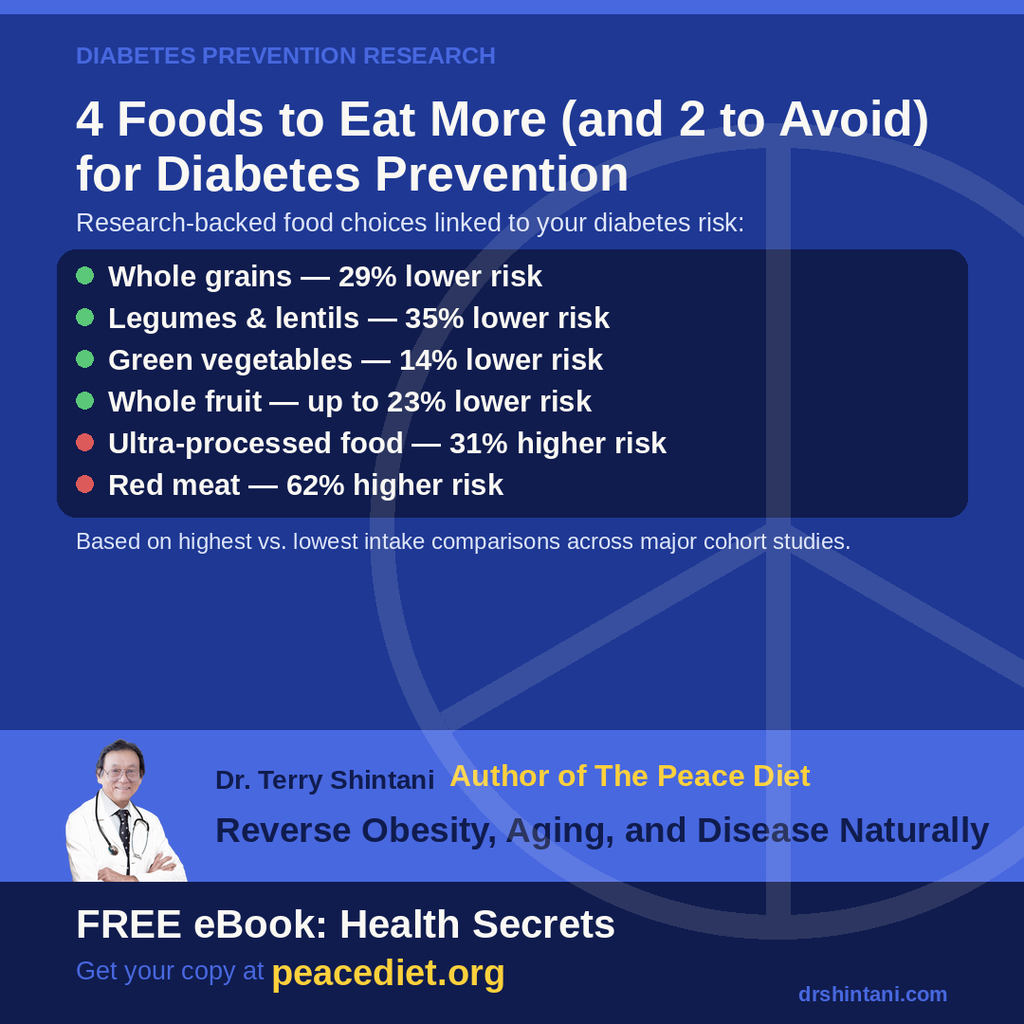
Eat These 4 Foods (and Avoid These 2) to Help Prevent Diabetes

Posted on October 13, 2026October 13, 2026 By drshintani No Comments on Eat These 4 Foods (and Avoid These 2) to Help Prevent Diabetes

Diabetes prevention may come down to simple, everyday food choices. According to Dr. Terry Shintani, MD, a Harvard-trained physician and nutritionist, the research points to four foods worth eating more of — and two worth cutting back on.

Foods associated with a lower risk of diabetes:

A large pooled study tracking over 194,000 people found that higher whole grain intake was associated with a 29% lower risk of type 2 diabetes. Other research has linked:

  • Whole fruit — especially blueberries, grapes, and apples, eaten at least twice a week — to up to 23% less diabetes
  • Green vegetables to 14% less diabetes
  • Legumes and lentils to 35% less diabetes

Foods associated with a higher risk of diabetes:

Ultra-processed food was associated with a 31% higher risk of diabetes. Separately, a Harvard study found that people who ate the most red meat — whether processed or unprocessed — had a 62% higher risk of diabetes compared to those who ate the least.

The takeaway

To help lower your risk of diabetes, consider eating more whole grains, vegetables, fruit, and legumes, while cutting back on red meat and ultra-processed food.

For more science-backed nutrition guidance, get Dr. Shintani’s free eBook, Health Secrets, at peacediet.org.

Sources: BMJ — whole grain intake and type 2 diabetes; BMJ — fruit/vegetable intake and type 2 diabetes; Harvard Gazette — whole fruit and diabetes risk; FoodNavigator — legumes and diabetes risk; Deseret News — Harvard red meat study; Glycemic Index Foundation — ultra-processed food and diabetes; NLM Native Voices

Uncategorized

Is Restoring This the Key to Fixing Chronic Disease? What Researchers Are Saying About Blood Flow

Posted on October 12, 2026 By drshintani No Comments on Is Restoring This the Key to Fixing Chronic Disease? What Researchers Are Saying About Blood Flow

At the World Congress of Anti-Aging Medicine, one researcher made a striking observation: every single chronic disease is characterized by decreased blood flow. If that circulation can be restored, it may be possible to correct many chronic conditions. Dr. Terry Shintani explains why this matters — and what you can do about it.

One of the biggest trends in health research is the role of macro- and micro-circulation in the chronic diseases of aging. Conditions linked to reduced blood flow include:

  1. High blood pressure
  2. Vascular dementia
  3. Diabetes
  4. Kidney disease
  5. Erectile dysfunction
  6. Peripheral neuropathy
  7. Digestive diseases

The compound at the center of this research is nitric oxide, which is known to relax blood vessels, lower blood pressure, and improve circulation. Researchers have documented that nitric oxide production gradually declines as we age — raising the possibility that many, or most, of these diseases are related to a lack of it. This also suggests nitric oxide may play a role in reversing these conditions.

About Dr. Terry Shintani
Dr. Terry Shintani, MD, JD, MPH, is a Harvard-trained physician and nutritionist, and the creator of the Peace Diet and the Waianae Diet. His mission is to help people achieve great health for up to 120 years.

For a list of 20 foods high in nitric oxide, get Dr. Shintani’s free eBook, Health Secrets, at peacediet.org.

Sources:

  • NLM Native Voices
  • NIH / PubMed: search “nitric oxide circulation chronic disease aging” for current research
Uncategorized

Could This Natural Nutrient Work Like Ozempic? What the Research Says About Chlorogenic Acid

Posted on October 11, 2026 By drshintani No Comments on Could This Natural Nutrient Work Like Ozempic? What the Research Says About Chlorogenic Acid

Many people are looking for natural ways to support weight loss, blood sugar control, and blood pressure — without turning straight to prescription medication. Dr. Terry Shintani points to one nutrient that keeps coming up in the research: chlorogenic acid. While studies on it are inconsistent, a meta-analysis of several trials suggests it may help with:

  1. Weight control
  2. Blood sugar control
  3. Cholesterol control
  4. Blood pressure control

There’s even evidence that chlorogenic acid stimulates the GLP-1 receptor — the same mechanism behind the popular weight-loss and blood-sugar drug Ozempic.

Chlorogenic acid is commonly sold as a green coffee bean extract, but it’s also naturally present in many everyday foods, including:

  1. Apples
  2. Pears
  3. Eggplants
  4. Blueberries
  5. Tomatoes
  6. Strawberries
  7. Carrots
  8. Potatoes

If weight loss, blood sugar, or blood pressure control are on your goal list, working more of these foods into your week is a simple, natural place to start.

About Dr. Terry Shintani
Dr. Terry Shintani, MD, JD, MPH, is a Harvard-trained physician and nutritionist, and the creator of the Peace Diet and the Waianae Diet. His mission is to help people achieve great health for up to 120 years.

Get Dr. Shintani’s free eBook, Health Secrets, at peacediet.org.

Sources:

  • NLM Native Voices
  • NIH / PubMed: chlorogenic acid and metabolic health (search “chlorogenic acid GLP-1 weight blood pressure” on PubMed for current meta-analyses)
Uncategorized

3 Benefits of Earthing: Harness Mother Earth’s Power to Heal

Posted on October 10, 2026 By drshintani No Comments on 3 Benefits of Earthing: Harness Mother Earth’s Power to Heal

Earthing, or grounding, is the practice of making direct physical contact with the earth’s surface. It’s believed that this connection allows electrons from the earth to transfer into the body, helping to neutralize free radicals and reduce inflammation.

Here are three research-based benefits of earthing.

1. Reduces Inflammation and Pain

Research has shown that earthing can significantly reduce inflammation and pain by neutralizing free radicals — demonstrated by lower inflammatory markers and reduced chronic pain associated with arthritis and other inflammatory conditions.

2. Improves Sleep Quality

Earthing has also been found to improve sleep quality. Research found that grounded individuals reported better sleep, apparently due to the stabilization of nighttime cortisol levels.

3. Improves Blood Flow

Earthing also appears to improve blood flow, and preliminary research suggests it can reduce blood pressure by as much as 20%.

How to Practice Earthing

Walk barefoot on natural surfaces such as grass or sand for 20 to 30 minutes daily, or use grounding mats indoors if direct outdoor contact isn’t practical.

For more tips on natural health, download the free eBook Health Secrets at peacediet.org.

About Dr. Terry Shintani, MD, JD, MPH

Dr. Terry Shintani is a Harvard-trained physician and nutritionist, named a Living Treasure of Hawai’i and recipient of the U.S. Secretary of Health and Human Services Award for Excellence. He is the creator of the Peace Diet and the landmark Waianae Diet — published in the American Journal of Clinical Nutrition and cited over 137 times — and the author of 16 books on natural health and nutrition, drawing on more than 35 years of clinical practice in Honolulu, Hawaii.

Learn more about Dr. Shintani’s work and recognition: NLM Native Voices

Sources:

  • NIH/PubMed — Earthing: Health Implications of Reconnection with the Earth’s Surface Electrons
  • NIH/PubMed — Grounding the Human Body and Its Effect on Sleep and Cortisol
  • NIH/PubMed — Earthing and Cardiovascular Markers: A Pilot Study
Uncategorized

5 Culinary Spices That Help With Diabetes Control

Posted on October 9, 2026 By drshintani No Comments on 5 Culinary Spices That Help With Diabetes Control

These spices were once used as medicine. Today, they’re used to make our food delicious — and research shows they help with diabetes, too.

1. Turmeric

Used in Ayurveda for millennia, turmeric is now known to reduce insulin resistance.

2. Cinnamon

Once used to enhance digestion, cinnamon has been shown to lower blood sugar levels and reduce heart disease risk.

3. Ginger

Traditionally used for its anti-nausea properties, ginger has been shown to help reduce insulin resistance and fasting blood sugar levels.

4. Garlic

Used for thousands of years in China for its antimicrobial properties, garlic is recognized today for its ability to lower blood sugar and cholesterol.

5. Cayenne Pepper

Historically used to improve circulation, cayenne pepper is currently used for pain relief through its capsaicin content — which also helps improve insulin sensitivity.

To get healthier now, consider working these spices into your cooking. For more tips on natural health, download the free eBook Health Secrets at peacediet.org.

About Dr. Terry Shintani, MD, JD, MPH

Dr. Terry Shintani is a Harvard-trained physician and nutritionist, named a Living Treasure of Hawai’i and recipient of the U.S. Secretary of Health and Human Services Award for Excellence. He is the creator of the Peace Diet and the landmark Waianae Diet — published in the American Journal of Clinical Nutrition and cited over 137 times — and the author of 16 books on natural health and nutrition, drawing on more than 35 years of clinical practice in Honolulu, Hawaii.

Learn more about Dr. Shintani’s work and recognition: NLM Native Voices

Sources:

  • NIH/PubMed — Curcumin and Insulin Resistance: A Review
  • NIH/PubMed — Cinnamon Supplementation and Glycemic Control: Meta-Analysis
  • NIH/PubMed — Capsaicin and Insulin Sensitivity
Uncategorized

Posts pagination

1 2 … 31 Next

About Dr. Shintani

Dr. Terry Shintani, MD, JD, MPH is a Board Certified Physician and Harvard-trained
nutritionist. His wellness program won a national award from the U.S. Secretary of
Health and Human Services and his peer-reviewed work is published in the American Journal of
Clinical Nutrition and several other scientific journals.  He also was featured in “Dateline NBC”,
CBS, “This Morning” CNN, Fox and  Newsweek  His Program is featured in the Encyclopedia
Britannica.  He has written 16 books including the Eat More Weigh Less(r) Diet, the Hawaii
Diet, the Carbohydrate revolution and the Peace Diet. Among his many community awards, He
was named a “Food Hero” by Eating Well Magazine, He was knighted by the Orthodox Order of
St. John, and formally designated a “Living Treasure” of Hawaii.

Read More

Search

  • Home
  • Blog
  • Join Us
  • PeaceDiet

Find Us

HAWAII HEALTH FOUNDATION

50 S.Beretania St. C-119B Honolulu, HI 96813

Email: mail@eHealthAndYou.com

Age Calculator

image

Copyright © 2026 Dr.Shintani.

Powered by PressBook WordPress theme