
For decades, milk has been presented as essential for getting enough calcium and preventing osteoporosis. But the relationship between dairy consumption and bone health is more complicated than it’s often made out to be — some of the countries with the highest dairy intake don’t show correspondingly lower osteoporosis rates, a pattern sometimes called the “calcium paradox.” (We covered some of the research behind this in our earlier post on dairy myths.)
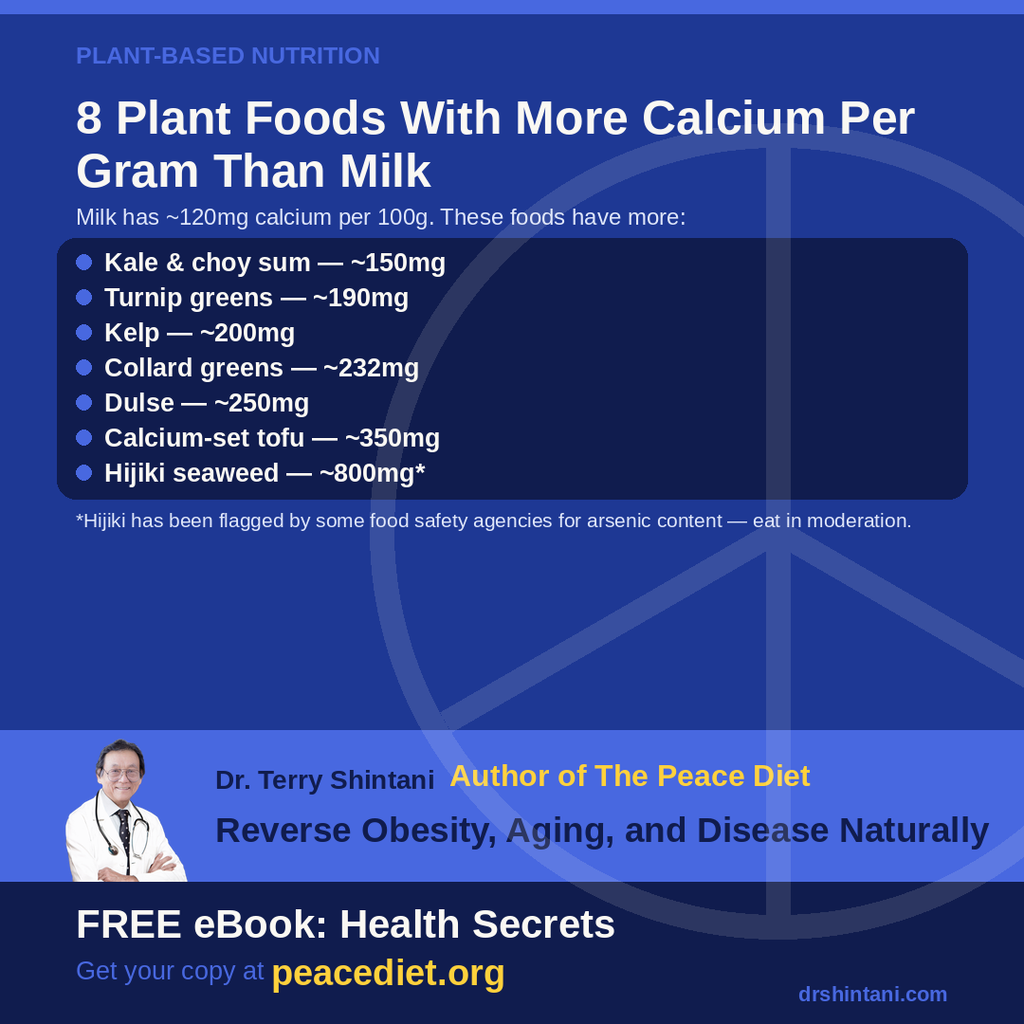
So where else can you get calcium? Milk provides about 120mg of calcium per 100 grams. Here are 8 plant-based foods that provide more calcium per gram:
- Kale — about 150mg per 100g
- Choy sum — about 150mg per 100g
- Turnip greens — about 190mg per 100g
- Kelp — about 200mg per 100g
- Collard greens — about 232mg per 100g
- Dulse (a type of seaweed) — about 250mg per 100g
- Tofu set with calcium sulfate — about 350mg per 100g (not all tofu is prepared this way, so check the label if calcium content matters to you)
- Hijiki (a Japanese seaweed) — about 800mg per 100g
A caution about hijiki:
While hijiki is exceptionally high in calcium, it’s also known to absorb inorganic arsenic from seawater. Food safety agencies in the U.S., Canada, the EU, and Hong Kong have advised limiting or avoiding hijiki consumption due to this concern. It’s not necessary to eliminate it entirely, but it’s best treated as an occasional food rather than a daily calcium source.
Getting calcium from a variety of plant foods — not just dairy — is a practical way to support bone health while also getting the fiber, antioxidants, and other nutrients that come packaged with whole plant foods.
For more tips on plant-based nutrition, get my free eBook, Health Secrets, at PeaceDiet.org.
I’m Dr. Shintani, for your health.
Sources & further reading:


